Think your experiences match the Asian Purity Test? Check the statements that apply to you and get your score instantly. This Asian-themed twist on the Rice Purity Test is just for fun, not a measure of your identity.
A way to measure your level of westernized "Asian-ness."
Whether you're whitewashed, an ABG/ABB, or just a normal Asian, track your progress here.
For entertainment only. This test cannot measure ethnicity, identity, or cultural authenticity — it's just a checklist for laughs.
You’ll see a checklist of statements. Check the ones that have happened to you or describe you, leave the rest blank, and submit to get your score right away. There’s no right result to aim for. The fun is in recognizing yourself in some items and laughing at the ones that couldn’t be further from your life.
It works well with friends or in a group chat, where comparing answers is half the point.
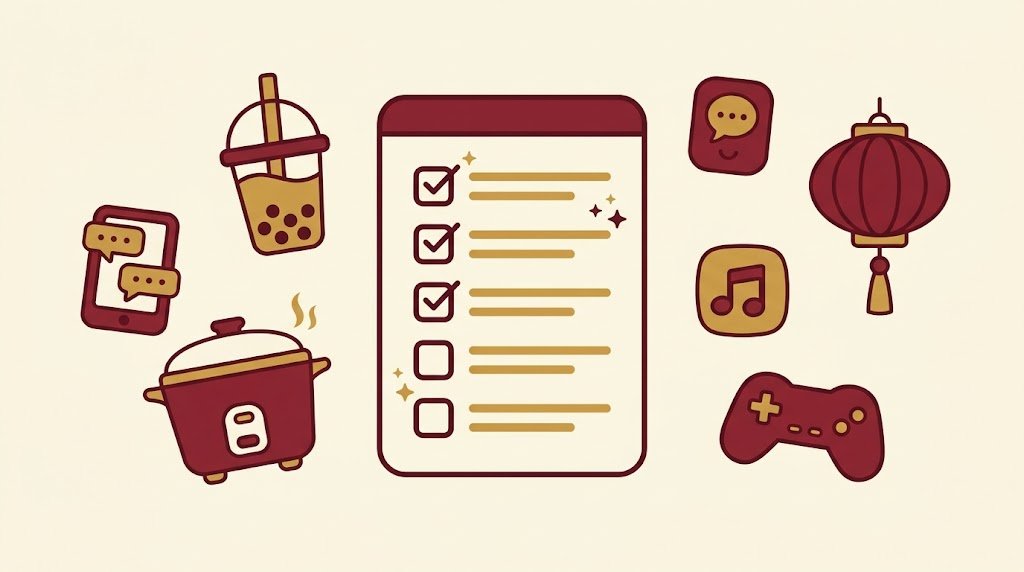
Asian-themed versions of the test use checklists of cultural and social experiences, with questions that vary from one quiz to another. The questions tend to touch on:
| Theme | What It Covers |
|---|---|
| Food & Drink | The rice cooker, milk tea runs, how the family orders at restaurants. |
| Family Life | Household rules, expectations, relatives fighting over the bill. |
| School & Activities | Tutoring, music lessons, weekend language classes. |
| Social Life & Style | Brands, hangout spots, photos of food. |
| Music, Games & Media | Music, games and media that circulate in particular communities. |
| Names & Language | Names, language, and being mistaken for a different ethnicity. |
These are themes from one quiz, not facts about Asian people. Asia spans many countries, languages, religions and family structures, and the diaspora adds even more variety. Someone raised in Manila, Mumbai, Seoul, Toronto or a small town in Ohio will check very different boxes. Plenty of items describe one slice of one experience, so leaving many of them blank is normal. That says something about the list, not about you.
Your score starts at 100, and every item you check subtracts one point. A higher score means you checked fewer items, and a lower score means you checked more. Every item counts the same. As a made-up example, checking 25 items would give you a score of 75.
There’s no official “good” or “bad” score. Your score mainly reflects the questions included in this version and how many of those experiences apply to you. It only makes sense against other people who took this same version, because sites use different lists and different scoring.
No. It can’t measure ethnicity, identity or cultural authenticity, and it wasn’t designed to. Nobody is more or less Asian because of the boxes they tick. Growing up in a mixed household, far from a large Asian community, in a country where you’re in the majority, or adopted all changes which items apply. None of it changes where you belong.
Treat it as a comedy checklist, and share it with people who’ll enjoy it the same way.
The original Rice Purity Test grew out of surveys first published in 1924 by Rice University’s student newspaper, The Rice Thresher. The version people take today has 100 questions about romantic and sexual experiences, alcohol and drug use, and run-ins with rules or the law. The classic score starts at 100 and drops by one point for each item you check.
The Asian Purity Test borrows that checklist format but changes the subject. Rather than focusing on personal milestones, it turns cultural and social experiences into a humorous checklist. It isn’t affiliated with or endorsed by Rice University or The Rice Thresher.
Because the questions and themes differ, an Asian Purity Test score can’t be compared with a Rice Purity Test score. It also can’t be compared with a score from another site’s Asian test, since those lists don’t match.
It’s a humorous checklist quiz that parodies the Rice Purity Test. You check the cultural and social experiences that apply to you and get a score. It’s for entertainment only.
The phrase “True Asian Rice Purity Test” is used to describe Asian-themed parodies of the Rice Purity Test. The exact questions and scoring can vary between websites. The name doesn’t refer to one official list, and this page hosts one version.
Your score starts at 100, and each item you check subtracts one point. A higher score means fewer checked items. See “How the Asian Purity Test score works” above for an example.
No. A higher or lower score only tells you how many items you checked, not anything about your character, culture or worth.
No. It uses a similar checklist format, but it has its own questions, its own theme and no affiliation with Rice University or The Rice Thresher.
No. It’s a joke checklist. It can’t determine ethnicity, identity or cultural authenticity.
No, anyone can take it for fun. Just keep in mind the items are jokes drawn from particular communities’ experiences, not a rulebook for any of them.